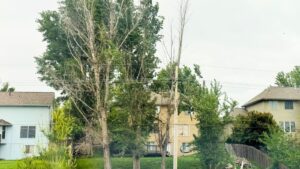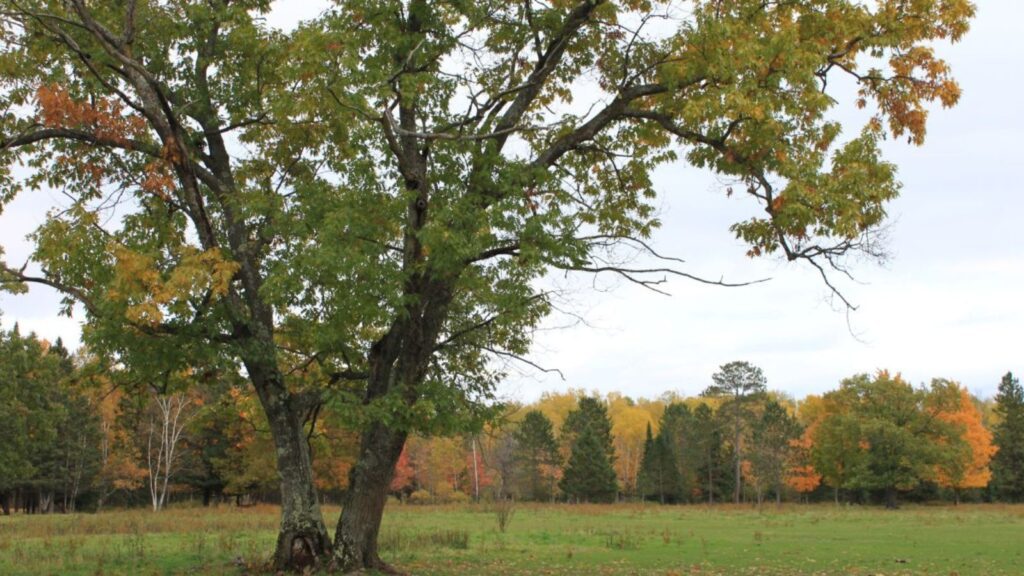
Silver maples are among the most common shade trees throughout Omaha, but they’re also one of the first trees homeowners notice dropping leaves during the summer. Every year, we receive questions from homeowners wondering whether early leaf drop means they’re seeing the signs of a silver maple tree dying or simply a normal seasonal response while nearby oaks, lindens, and other shade trees remain full.
The answer is not always straightforward. Silver maples respond quickly to heat, drought, storms, and root stress. Understanding how these trees react to local growing conditions can help you distinguish between normal seasonal leaf drop and a tree that may need professional attention.
Early Leaf Drop Is Not Always a Sign of a Silver Maple Tree Dying
One question that comes up frequently is whether a healthy silver maple should lose leaves during the summer. In many cases, the answer is yes.
Silver maples naturally shed older interior leaves after periods of heat or inconsistent rainfall. This helps reduce water loss while protecting newer growth around the outside of the canopy.
Leaf drop becomes more concerning when it affects large portions of the tree. Dead branches, thinning foliage, or leaves that brown before falling often suggest something more than temporary environmental stress.
At Tree Services of Omaha, we often remind homeowners that early leaf drop by itself rarely tells the whole story. Evaluating the tree’s overall health provides a much clearer picture than focusing on a single symptom.
Where Tree Location Matters
One noticeable pattern during inspections is that homeowners often compare their silver maple to a neighbor’s tree. Two trees on the same block can respond very differently because one has room for its roots to spread while the other is confined between pavement and compacted soil.
Silver maples growing between sidewalks and streets, beside driveways, or in compacted soil often experience more stress. Limited rooting space, reflected heat, and winter de-icing salts can all contribute to earlier leaf drop.
Construction activity, soil compaction, and changes to drainage can also affect how well a silver maple tolerates Nebraska’s summer weather.
Normal Leaf Drop vs. Warning Signs
Many homeowners focus on how many leaves have fallen. During an inspection, evaluating several symptoms together usually provides a much clearer picture than assuming a silver maple tree is dying based on leaf drop alone.
| Often a Normal Response | May Need Professional Evaluation |
|---|---|
| Interior leaves dropping during hot weather | Leaf drop across the entire canopy |
| Healthy green leaves remain on outer branches | Large dead branches or dying limbs |
| Temporary thinning after dry weather | Canopy becoming thinner each year |
| New growth continues developing | Bark peeling or deep trunk cracks |
| Leaf drop slows after rainfall | Mushrooms growing around the base |
What Fallen Leaves Reveal
Before looking high into the canopy, we often begin by examining the leaves that have already fallen. Comparing them with leaves still attached to the tree can reveal patterns that are not always obvious from the ground.
| What You Notice | What It May Suggest |
|---|---|
| Mostly yellow interior leaves | Heat or drought stress |
| Dark spots or blotches | Possible leaf disease |
| Smaller leaves in one section | Long-term stress affecting that part of the tree |
| Damage mostly on one side | Localized root damage or past construction nearby |
Although fallen leaves can provide valuable clues, they are only one part of evaluating a tree’s overall condition. A complete inspection considers the canopy, trunk, root flare, and surrounding site conditions together.
Look Below the Canopy
Many customers are surprised when an inspection starts at the base of the tree instead of the canopy. In many cases, the leaves are simply showing the effects of a problem that began underground.
Silver maples develop broad, shallow root systems that can be affected by construction, new sidewalks, grading changes, compacted soil, and repeated vehicle traffic.
A recurring question is why only one side of the canopy appears unhealthy. Often, only part of the root system has been damaged, causing a decline in the branches supported by those roots.
Because many root-related problems develop gradually, homeowners may not notice visible changes in the canopy until months or even years after the original damage occurred.
When to Schedule a Professional Tree Inspection
One situation we see repeatedly is homeowners waiting until a large limb dies before requesting an inspection. In many cases, smaller warning signs had been present for more than one growing season.
It is worth having your silver maple evaluated if you notice:
- Large dead branches in the upper canopy
- Heavy leaf drop across the entire tree
- Branch tips that fail to leaf out in spring
- The same sections of the canopy becoming thinner each year
- Cracks in the trunk or major limbs
- Bark peeling away in large sections
- Mushrooms growing around the base
- A noticeable lean that developed recently
- Storm damage affecting major branches
Catching these changes early often provides more management options than waiting until a significant decline develops. In some cases, proper pruning, improved tree health care, or other treatments may help preserve the tree before the damage becomes irreversible.
Signs of a Silver Maple Tree Dying
A silver maple tree that is declining typically shows more than one warning sign. While early leaf drop is common in Omaha, it should always be considered alongside branch condition, trunk health, root issues, and changes from one growing season to the next.
When several symptoms appear together, a professional evaluation can help determine whether the tree is responding to temporary environmental stress or experiencing long-term decline caused by disease, root damage, structural issues, or decay.
The sooner potential problems are identified, the more options homeowners often have for protecting the tree or planning for safe removal if necessary.
Frequently Asked Questions
Why is my silver maple dropping leaves in the summer?
Silver maples commonly shed older interior leaves during hot or dry weather to reduce stress and conserve moisture. Widespread leaf loss combined with dead branches, thinning foliage, or trunk damage may indicate a more significant problem.
Does early leaf drop always mean a silver maple tree is dying?
No. Early leaf drop is often a normal response to heat, drought, or other environmental conditions. The concern increases when it occurs alongside symptoms such as canopy thinning, peeling bark, trunk defects, or dead limbs.
How can I tell if my silver maple is dying?
Look for several warning signs rather than focusing on a single symptom. Dead branches, trunk cracks, peeling bark, fungal growth near the base, repeated canopy thinning, and progressive decline over multiple seasons are stronger indicators than leaf drop alone.
Can a stressed silver maple recover?
Many stressed silver maples recover when the underlying issue is identified and addressed early. Proper pruning, improved growing conditions, and professional tree care may help if significant decay has not developed.
When should I have my silver maple inspected?
It is a good idea to schedule an inspection if your tree develops large dead branches, major storm damage, trunk defects, unexpected leaning, repeated canopy decline, or any other noticeable changes in its overall health. Early evaluation often provides more options for preserving the tree and reducing potential safety risks.
Tree Services of Omaha – Tree Removal Services
Tree Services of Omaha, Nebraska is a full-service tree care provider that offers a wide range of arborist services, including but not limited to: Tree Removal Services, Tree Trimming, Tree Pruning, Tree and shrubs Shaping, Stump Removal, Stump Grinding, Emerald Ash Borer Treatment, Mulch Delivery & Installation, Arborist Consultations, Systemic Tree Injection (Tree Healthcare).
Contact us today for a free estimate!