In Omaha, property line tree ownership is often less obvious than homeowners expect. A tree might lean across a fence, drop branches into a neighbor’s yard, or cause issues underground without clearly belonging to just one property. These situations can quickly turn confusing, especially when maintenance, safety, or removal becomes necessary.
Tree responsibility is typically determined based on clear property boundaries, helping you avoid unnecessary disputes and make better decisions when trees grow near shared lines
When the Tree Is Fully on Your Property
In most cases, ownership is simple. If the trunk is entirely on your land, the tree is considered yours, even if branches extend beyond the property line.
This is one of the clearest examples of how tree responsibility works in Omaha property line situations. Maintenance, trimming, and removal decisions usually fall on the property owner where the tree is rooted.
Even when a neighbor is affected by shade or falling leaves, the ownership does not typically change.
When Branches Extend Into Another Yard
It’s common for mature trees to spread far beyond their original planting location. Branches may hang over roofs, fences, or driveways on the neighboring property.
In these cases, property line tree ownership rules generally allow neighbors to trim branches that extend into their space. However, the trimming must be done carefully to avoid harming the tree’s health or stability.
Problems often arise when cutting is done too aggressively or without understanding how the tree responds structurally.
Trees Growing Directly on the Property Line
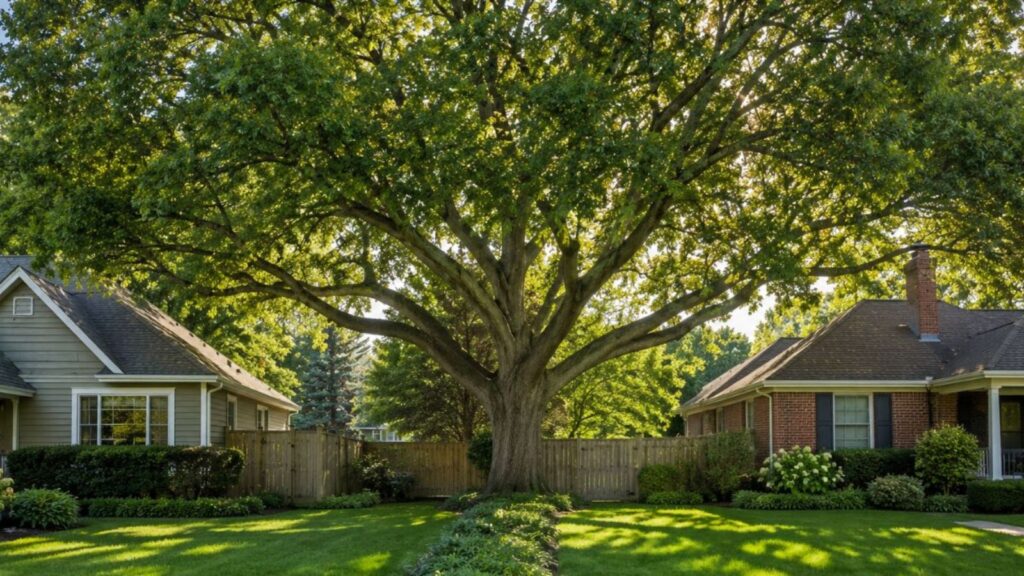
Some situations are less clear. When a trunk sits directly on or very near the boundary, ownership may be shared between both property owners.
This is where tree ownership near property lines in Omaha gets more complicated. Major decisions like removal or significant pruning often require agreement from both sides.
Because both properties are affected, cooperation usually prevents misunderstandings and delays.
Hidden Issues From Roots Crossing Boundaries
Not all tree problems are visible above ground. Roots can extend far beyond the canopy and interfere with sidewalks, driveways, or underground systems.
Root-related issues are often part of property line tree ownership discussions, even though roots don’t stay within boundaries.
While roots may cause damage to another property, removing them without care can destabilize the entire tree. That’s why underground issues often require a closer evaluation before action is taken.
Storm Damage and Fallen Trees
Severe weather can completely change a situation overnight. A tree that was stable yesterday may now be leaning, broken, or partially fallen across multiple properties.
After storms, responsibility questions often resurface in Omaha property line tree ownership situations.
In reality, the condition of the tree before the storm and visible warning signs can play a role in determining responsibility. Still, the immediate priority is safety. Damaged trees can remain unstable long after the storm passes.
Why Property Boundaries Matter More Than Fences
Fences are often used as reference points, but they don’t always match legal property lines.
That’s why tree ownership along property lines is often misunderstood. A survey provides the most accurate way to confirm where a boundary actually sits.
Knowing the exact line helps prevent disputes and makes decisions about pruning or removal much clearer.
When You Should Pay Attention to a Tree
Some tree issues should not be ignored, especially when they involve shared spaces or structures nearby.
It’s worth getting an inspection if you notice:
- Large dead or hanging branches near a boundary
- A tree leaning toward another property or structure
- Visible trunk cracks or decay
- Roots lifting pavement or damaging hardscapes
- Storm damage affecting stability
Catching these signs early helps prevent larger and more expensive problems later.
Getting Clarity Before Problems Grow
Most disputes involving trees near property lines come down to uncertainty rather than actual conflict. Once it’s clear where responsibility lies, decisions become easier for everyone involved.
In many cases involving tree ownership near property lines, a professional assessment can help clarify risk, structure, and next steps before damage or disagreements escalate.
Frequently Asked Questions
In Omaha, who is responsible for a tree on a property line?
Responsibility usually depends on where the trunk is located in relation to the boundary. If the tree sits fully on one property, that owner is typically responsible for its care and maintenance. If the trunk crosses the line, responsibility may be shared between both property owners.
Can I trim branches from a neighbor’s tree?
You can usually trim branches that extend onto your property as long as you do not damage the overall health of the tree. Cutting too aggressively or improperly can create safety or stability issues that may lead to disputes later.
What if the tree is exactly on the property line?
A tree located directly on the boundary is often considered jointly owned by both property owners. Any major decisions, such as removal or significant pruning, typically require agreement from both sides before work begins.
Do roots change ownership of a tree?
Roots do not change who owns the tree, even if they extend into another property. However, they can still cause damage that leads to discussions or responsibility concerns between neighbors.
When should a professional be involved?
A professional should be involved if the tree shows signs of instability, storm damage, or structural decline. It is also recommended that when the tree is close to homes, driveways, or utility lines to reduce safety risks.
Tree Services of Omaha – Tree Removal Services
Tree Services of Omaha, Nebraska is a full-service tree care provider that offers a wide range of arborist services, including but not limited to: Tree Removal Services, Tree Trimming, Tree Pruning, Tree and shrubs Shaping, Stump Removal, Stump Grinding, Emerald Ash Borer Treatment, Arborist Consultations, Systemic Tree Injection (Tree Healthcare).
Contact us today for a free estimate!