Knowing the difference between tree healthcare and tree removal helps you make a safer and more practical decision for your property. It can also prevent removing a tree that could recover, or keeping one that may already be unsafe.
Tree issues often start small but become more noticeable over time. Weak branches, thinning leaves, or a developing lean can signal underlying problems. At that point, the focus shifts from appearance to safety and long-term stability.
For homeowners in Omaha, working with a local arborist who understands regional tree species and weather conditions makes it easier to choose the right approach early, before the issue worsens.
How to Tell What Your Tree Really Needs
Trees rarely fail overnight. Most show warning signs first, but those signs don’t always point to a single clear issue.
For example, a thinning canopy might indicate nutrient deficiency, or it could signal internal decay. Because symptoms often overlap, a proper inspection is usually needed to determine whether the problem can be treated or requires removal.
Signs Your Tree May Benefit from Healthcare
Tree healthcare focuses on improving the condition of a tree so it can continue growing safely. In many cases, early intervention can prevent long-term decline.
Common signs your tree may still be salvageable include:
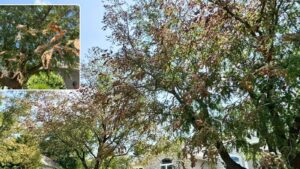
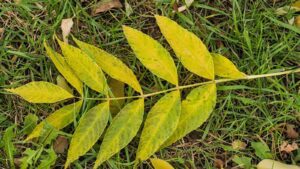
- Leaves changing color too early or unevenly
- Slower growth compared to previous seasons
- Small dead branches scattered throughout the canopy
- Signs of insect activity such as holes in bark or sticky residue
- Soil compaction or poor nutrient conditions around the roots
These issues often point to stress rather than failure. With the right care, such as pruning, fertilization, or pest treatment, the tree can recover and remain stable.
When Tree Removal Becomes the Safer Choice
In some cases, a tree reaches a point where treatment is no longer enough to restore safety or stability. At that stage, removal becomes the more responsible option.
Warning signs that removal may be necessary include:
- Large sections of dead or decaying wood
- Deep cracks or hollow areas in the trunk
- A noticeable lean that has worsened over time
- Root damage from construction or soil movement
- Frequent branch drop, especially after storms
In Omaha’s unpredictable weather, trees in this condition can quickly become hazardous, especially near homes, driveways, or power lines.
What Tree Healthcare Actually Involves
Tree healthcare goes beyond occasional trimming. It’s a structured approach designed to improve long-term health while maintaining safety.
Depending on the issue, services may include:
- Selective pruning to remove weak or overcrowded branches
- Soil treatment to restore nutrients and improve drainage
- Pest and disease management tailored to the problem
- Cabling or bracing to support weakened limbs
- Ongoing monitoring to track progress over time
The goal is to stabilize the tree and support healthier growth without removing it unnecessarily.
What Tree Removal Typically Includes
Tree removal is more complex than it appears and requires careful planning, especially when trees are near structures or utilities.
Situations that typically require removal include:
- Trees that are no longer structurally stable
- Roots interfering with foundations or pavement
- Severe internal decay weakening the trunk
- Trees growing too close to buildings
- Safety risks that cannot be corrected through treatment
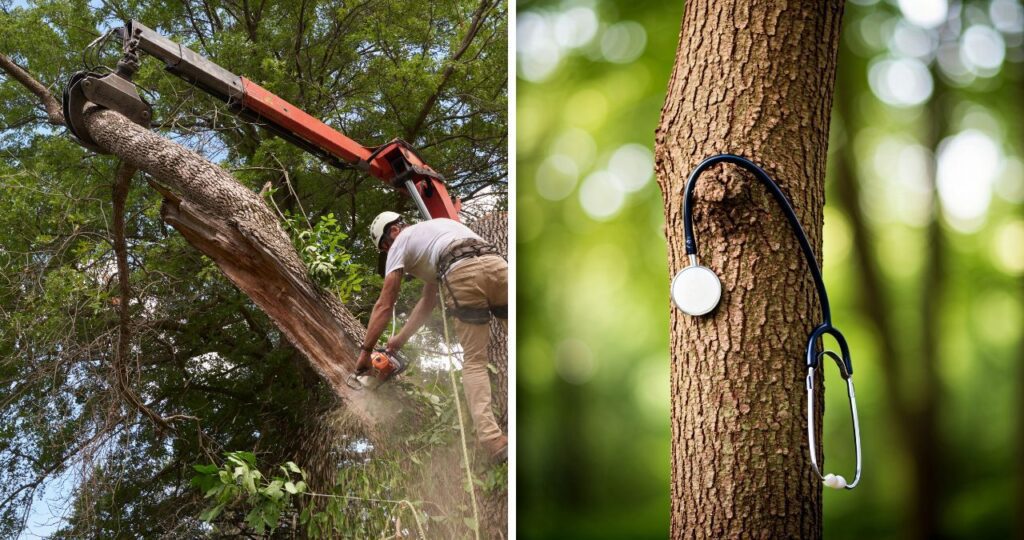
Professional removal includes controlled dismantling, debris cleanup, and protecting surrounding property throughout the process.
Choosing Between Saving and Removing a Tree
The decision ultimately comes down to safety, long-term value, and the likelihood of recovery.
Trees that respond well to treatment may be worth preserving, especially if they provide shade, privacy, or landscape value. However, trees with structural damage can become liabilities over time.
A certified arborist can evaluate:
- Internal trunk condition
- Root stability
- Overall canopy health
- Proximity to structures or utilities
- Likelihood of recovery
This type of assessment provides a clear, informed path forward.
When It’s Time to Take Action
Waiting too long to address tree issues can limit your options. What starts as a manageable problem can quickly become a safety concern, especially after storms or seasonal stress.
Taking action early helps:
- Reduce the risk of property damage
- Avoid emergency removals
- Preserve trees that can still be saved
- Maintain a safer outdoor environment
- Support long-term landscape health
Regular inspections are one of the simplest ways to catch issues early and avoid larger problems later.
Frequently Asked Questions
How do I know if my tree can still be saved?
If the damage is limited to leaves, small branches, or soil conditions, treatment is often possible. Structural issues usually require a professional evaluation.
Is tree removal always the last option?
In most cases, yes. Removal is typically recommended when the tree poses a safety risk or cannot recover through treatment.
Can a tree recover from disease or pests?
Many trees can recover if the issue is caught early and treated properly. Outcomes depend on the severity and type of problem.
Should I get a professional opinion before deciding?
Yes. An arborist can determine whether the issue is manageable or if removal is the safer option.
How quickly should I act after noticing problems?
As soon as possible. Early evaluation increases the chances of saving the tree and avoiding larger issues.
Tree Services of Omaha – Tree Removal Services
Tree Services of Omaha, Nebraska is a full-service tree care provider that offers a wide range of arborist services, including but not limited to: Tree Removal Services, Tree Trimming, Tree Pruning, Tree and shrubs Shaping, Stump Removal, Stump Grinding, Emerald Ash Borer Treatment, Arborist Consultations, Systemic Tree Injection (Tree Healthcare).
Contact us today for a free estimate!