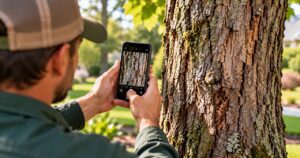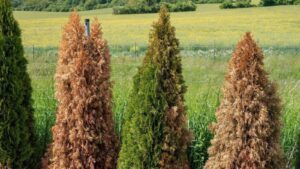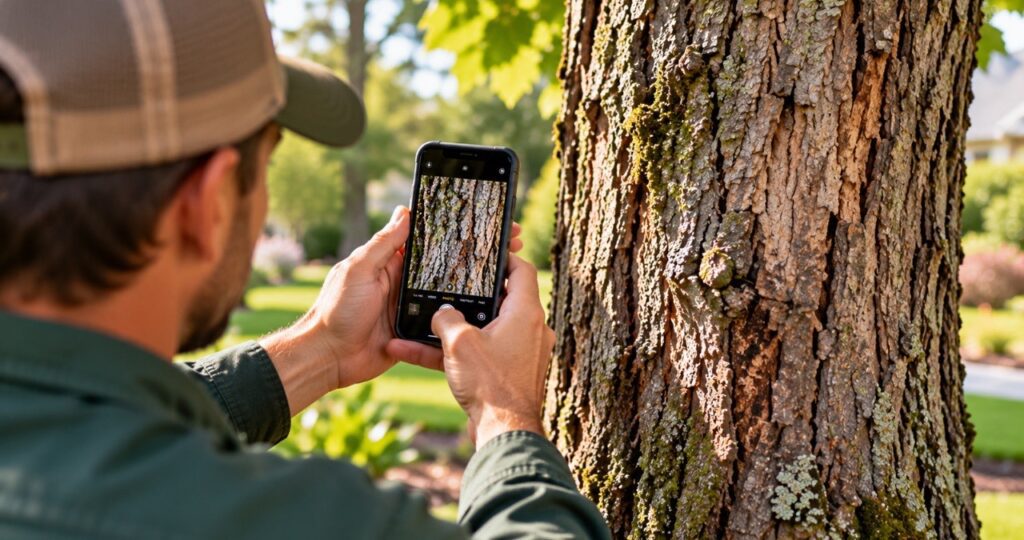
When a tree develops brown leaves, unusual spots, or dying branches, homeowners often turn to online tools for answers. AI tree diagnosis applications allow users to upload photographs and receive possible explanations within seconds.
These tools can help identify visible symptoms and suggest potential causes. However, similar symptoms can result from disease, insects, drought, root damage, or environmental stress. A photograph may provide useful clues without revealing the actual cause.
Understanding these tools’ limitations can help homeowners decide when a professional assessment is necessary.
AI Recognition of Visible Tree Symptoms
Image recognition tools can identify patterns associated with common tree health problems. Depending on photograph quality, an AI tool may recognize:
- Brown or yellow leaf discoloration
- Unusual spots or markings on foliage
- Holes or irregular leaf damage
- Powdery growth on leaves
- Visible bark damage
- Dead or thinning branches
For example, brown spots may suggest fungal disease, while irregular holes could indicate insect feeding.
These observations provide a starting point when homeowners are unsure what they are seeing. However, recognizing a visual pattern does not confirm its cause. An AI tool may identify symptoms associated with a disease without establishing whether that disease is actually present.
Similar Tree Symptoms and Possible Misdiagnoses
A common misconception is that a specific symptom always points to a particular disease or pest.
Different problems can produce nearly identical changes in a tree’s appearance. A maple with thinning foliage and dying branches, for example, may appear diseased when the underlying issue involves compacted soil, restricted root growth, or prolonged moisture stress.
Treating the visible symptom without addressing its cause may not improve the tree’s condition.
| What You Notice | Possible Causes | What to Investigate |
|---|---|---|
| Yellowing leaves | Nutrient deficiency, water stress, root problems | Soil conditions and drainage |
| Brown leaf spots | Fungal disease, bacterial infection, environmental damage | Pattern and progression |
| Dead branches | Disease, insects, drought, physical injury | Branch and trunk condition |
| Cracked or peeling bark | Natural shedding, injury, decay | Extent and depth of damage |
| Thinning canopy | Root problems, pests, environmental stress | Overall tree health |
The distribution of symptoms also provides clues. Damage affecting one portion of the canopy may suggest localized injury, while widespread decline may indicate a broader problem.
Tree species and seasonal timing matter, too. Without this context, an image recognition tool may mistake normal seasonal changes for disease.
Hidden Tree Problems Beyond the Camera
Some serious tree problems develop in areas that a camera cannot capture. Root damage and internal trunk decay are two examples.
Root problems may develop after construction, soil compaction, changes in grading, or poor drainage. Affected trees may develop sparse foliage, premature leaf drop, or branch dieback. However, these symptoms do not reveal how extensively the roots have been affected.
Internal trunk decay presents another challenge. A tree may retain much of its foliage even when portions of its internal wood have deteriorated.
During an assessment, a professional may examine:
- The root zone: Exposed roots, soil compaction, drainage, and signs of injury.
- The trunk: Cracks, cavities, wounds, and possible decay.
- Major branch attachments: Weak unions, included bark, and signs of splitting.
- The surrounding area: Construction, landscaping changes, and environmental conditions.
Depending on the findings, an arborist may recommend additional inspection or diagnostic methods to evaluate suspected decay or structural concerns.
Improving the Accuracy of AI Tree Assessments
Homeowners can make an initial AI assessment more useful by providing clear photographs and relevant background information.
A close-up of a damaged leaf may help identify a possible disease, but it does not show whether the entire canopy is affected.
For a more informative assessment, provide:
- A photograph showing the entire tree and canopy
- Close-ups of affected leaves, branches, and bark
- Images of healthy and damaged sections
- Photographs from different sides of the tree
- The tree species, if known
- When symptoms first appeared
- Recent weather conditions or watering changes
- Information about nearby construction or landscaping
Timing provides useful context. Leaf browning during an extended dry period may suggest moisture stress, while similar symptoms after heavy rainfall could involve drainage or root conditions.
Avoid applying pesticides, fertilizers, or disease treatments based solely on an AI-generated suggestion. An incorrect identification can lead to unnecessary treatment without addressing the actual problem.
Signs That Require a Professional Tree Assessment
AI identification may help with minor, localized symptoms, but certain conditions deserve closer evaluation.
An in-person assessment is particularly important when:
- Large branches are dying or breaking.
- The canopy is declining rapidly.
- Significant trunk cracks or cavities are present.
- Fungal growth or decay is suspected.
- Root damage is visible.
- The tree is suddenly leaning.
- The cause of recurring symptoms remains unclear.
A newly leaning tree, large hanging branch, or significant trunk crack may indicate an immediate safety concern. Keep people and vehicles away from the affected area and arrange a professional evaluation.
Location matters, too. A tree with weakened branches over a home, driveway, or frequently used area presents different safety concerns from one in an open section of a property.
Depending on the findings, recommendations may include improved growing conditions, tree healthcare services, pest management, tree trimming and pruning, monitoring, or removal when necessary.
For Omaha property owners, seasonal moisture changes, temperature extremes, soil conditions, and winter damage can also contribute to tree decline.
Turning AI Findings Into Practical Next Steps
AI tree diagnosis can help homeowners recognize visible symptoms and explore possible causes, but it should not determine treatment. Use the results as a starting point and monitor whether symptoms spread or worsen.
Record when the problem first appeared, along with recent changes in weather, watering, or landscaping. This information can help a professional identify the underlying issue and recommend appropriate care.
Avoid making treatment decisions based on a single photograph. Tree Services of Omaha can help property owners evaluate tree health, address damage, and determine the next steps.
Frequently Asked Questions
How accurately can AI identify a tree species from a photograph?
Image recognition tools can suggest a likely species based on leaf shape, bark, and growth patterns. However, similar species can be difficult to distinguish without additional identifying features.
Are tree diseases easier for AI to recognize during certain seasons?
Yes. Some diseases produce more recognizable symptoms during particular growing seasons. Leaf discoloration, fungal growth, and insect activity may also change with weather and tree development.
Can a photograph reveal whether a tree disease is contagious?
Not reliably. Determining whether a condition can spread requires identifying the disease and understanding how the responsible pathogen or pest spreads.
What types of insect damage can AI detect on tree bark?
AI may recognize holes, galleries, or other damage patterns associated with insect activity. However, identifying the responsible insect and determining whether an infestation is active may require closer examination.
Is it safe to follow AI-generated tree treatment recommendations?
Not without verifying the underlying problem. Recommendations involving pesticides, fertilizers, or disease treatments depend on accurate identification, tree species, and the severity of the condition. A professional assessment can help determine whether treatment is appropriate.
Tree Services of Omaha – Professional Tree Care
Tree Services of Omaha is a full-service tree care provider that offers a wide range of arborist services, including but not limited to: Tree Removal Services, Tree Trimming, Tree Pruning, Tree and Shrub Shaping, Stump Removal, Stump Grinding, Emerald Ash Borer Treatment, Mulch Delivery & Installation, Arborist Consultations, Systemic Tree Injection (Tree Healthcare).
Contact us today for a free estimate!