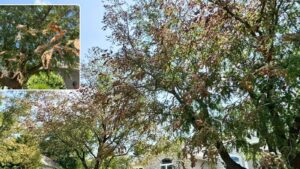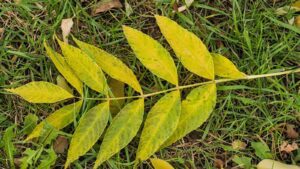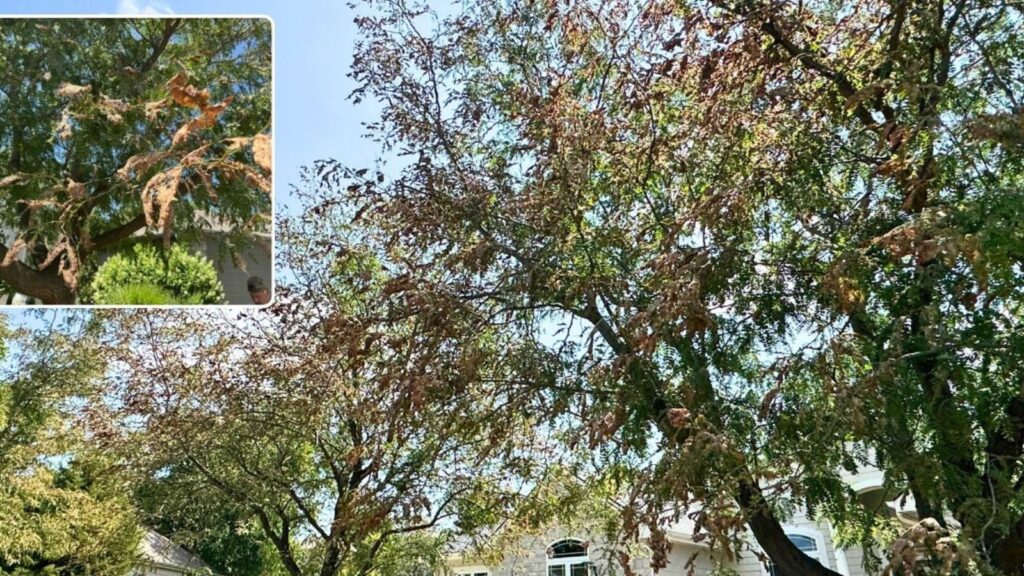
Every growing season, many of our first calls about insect damage don’t begin with homeowners finding bugs on their trees. Instead, they start with questions about thinning canopies, unusual woodpecker activity, or one ash tree declining while neighboring trees still appear healthy.
These observations often point to a larger pattern developing across Omaha and Douglas County rather than an isolated issue affecting a single property.
One of the biggest challenges with invasive tree pests is that visible damage usually appears after insects have already been active for weeks or even months. Recognizing the early warning signs can help homeowners distinguish between normal seasonal stress, environmental conditions, and pest activity before tree health declines further.
Common Invasive Tree Pests in Douglas County
One question we hear frequently is whether the same insects return every year. While weather conditions certainly influence insect populations, several invasive pests consistently affect trees throughout Douglas County.
| Pest | Trees Commonly Affected | Early Changes Often Noticed |
|---|---|---|
| Emerald ash borer | Ash | Upper canopy thinning, bark splitting, woodpecker activity |
| Japanese beetles | Linden, elm, maple | Skeletonized leaves during midsummer |
| Pine wilt vector beetles | Pine | Rapid browning beginning on individual branches |
Many homeowners expect to see insects crawling on the tree before there’s cause for concern. In reality, the earliest warning signs usually appear in the canopy.
Ash trees often begin thinning from the top down, while pine trees can lose their healthy green color surprisingly quickly during periods of warm weather.
By the time insects become easy to spot, they’ve often been feeding long enough to create noticeable stress within the tree.
Where Pest Pressure Is Highest
During inspections, homeowners often compare their trees with others on the same street. Two mature ash trees planted only a few houses apart can respond very differently because growing conditions are rarely identical.
Several site conditions consistently make trees more vulnerable to insect pressure:
- Limited rooting space near sidewalks, driveways, and streets
- Compacted soil caused by years of foot or vehicle traffic
- Reflected heat from pavement and nearby structures
- Construction activity that disturbs roots or alters drainage
Another pattern we regularly see throughout Douglas County is that neighborhoods planted heavily with a single tree species often experience more widespread damage once an invasive pest becomes established. Long rows of ash or pine trees provide insects with an uninterrupted food source, making it easier for populations to spread from property to property.
Stress Makes Trees More Vulnerable
Many homeowners assume insects are always the original cause of a declining tree. In reality, environmental stress often weakens a tree long before invasive insects begin causing significant damage.
Common stress factors include:
- Extended periods of heat and drought
- Storm damage to branches or trunks
- Root disturbance from construction projects
- Years of compacted or poorly drained soil
This distinction often changes how a professional inspection is approached. Rather than focusing solely on insect activity, arborists evaluate the tree’s overall health to determine why it’s becoming vulnerable in the first place.
In Omaha, invasive tree pests frequently gain a foothold after environmental conditions have already reduced a tree’s natural ability to defend itself. Looking beyond the insects alone often provides a much more complete picture of what’s driving the decline.
Early Warning Signs
Many homeowners focus on visible insect damage, but professional inspections often begin by looking for subtle changes throughout the tree instead.
| What Homeowners Notice | What It May Suggest |
|---|---|
| Increased woodpecker activity | Possible insect larvae beneath the bark |
| Thinning upper canopy | Early internal decline |
| Small exit holes in bark | Wood-boring insect activity |
| Leaves changing color earlier than nearby trees | Environmental stress or developing pest damage |
One pattern we frequently observe is that woodpeckers often locate insect larvae long before homeowners recognize anything unusual about the tree. Increased woodpecker activity, especially in mature ash trees, is often one of the earliest visible clues that further evaluation is worthwhile.
Comparing canopy density, branch growth, bark condition, and surrounding site conditions together provides a much clearer understanding than relying on a single symptom.
When to Schedule a Professional Tree Inspection
A common situation involves homeowners waiting until large branches begin dying before requesting an inspection. In many cases, the earliest warning signs had been developing quietly over more than one growing season.
It’s worth scheduling a professional inspection if:
- Multiple warning signs appear at the same time.
- Canopy decline worsens from one growing season to the next.
- Large branches begin dying.
- Nearby trees develop similar symptoms.
- Storm damage is followed by continued decline.
Waiting until major limbs begin failing often limits the management options available.
Identifying the cause early makes it much easier to determine whether the decline is related to insects, disease, environmental stress, or several factors occurring together.
Why Invasive Tree Pests in Omaha Matter
Every landscape presents a unique combination of tree species, soil conditions, and environmental stress, which is why invasive tree pests affect properties differently throughout Omaha.
Some neighborhoods experience widespread decline because they contain large populations of the same tree species, while others see relatively little insect activity. Early detection is one of the most effective ways to protect valuable trees before damage becomes extensive.
At Tree Services of Omaha, we’ve found that the earliest warning signs are rarely dramatic. Subtle canopy thinning, increased woodpecker activity, gradual changes from one growing season to the next, and differences between neighboring trees often provide the first indication that something is changing.
Recognizing these patterns early gives homeowners more opportunities to protect their trees and make informed decisions before insect damage becomes significantly more difficult and more expensive to manage.
Frequently Asked Questions
Which invasive tree pests are most common in Omaha?
Emerald Ash Borer, Japanese beetles, and Pine Wilt Vector Beetles are among the invasive pests most frequently associated with tree decline throughout the Omaha area.
How can invasive tree pests be detected early?
Early warning signs often include thinning canopies, increased woodpecker activity, bark splitting, exit holes, and leaves changing color earlier than nearby trees.
Does every declining tree have an insect infestation?
No. Heat stress, drought, construction damage, poor soil conditions, disease, and root problems can all produce symptoms similar to insect damage. A professional inspection evaluates the complete health of the tree.
When should a tree be professionally inspected?
Schedule an inspection if canopy thinning worsens each year, branches begin dying, bark develops unusual damage, woodpecker activity increases, or the tree changes noticeably compared with previous growing seasons.
Why are invasive tree pests a concern in Douglas County?
Douglas County has a large population of mature ash and pine trees. When invasive pests become established, they can spread more easily between nearby host trees, particularly when environmental stress has already weakened them.
Tree Services of Omaha – Tree Removal Services
Tree Services of Omaha, Nebraska is a full-service tree care provider that offers a wide range of arborist services, including but not limited to: Tree Removal Services, Tree Trimming, Tree Pruning, Tree and shrubs Shaping, Stump Removal, Stump Grinding, Emerald Ash Borer Treatment, Mulch Delivery & Installation, Arborist Consultations, Systemic Tree Injection (Tree Healthcare).
Contact us today for a free estimate!