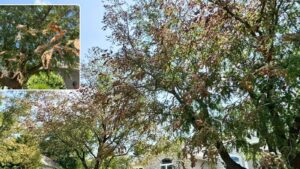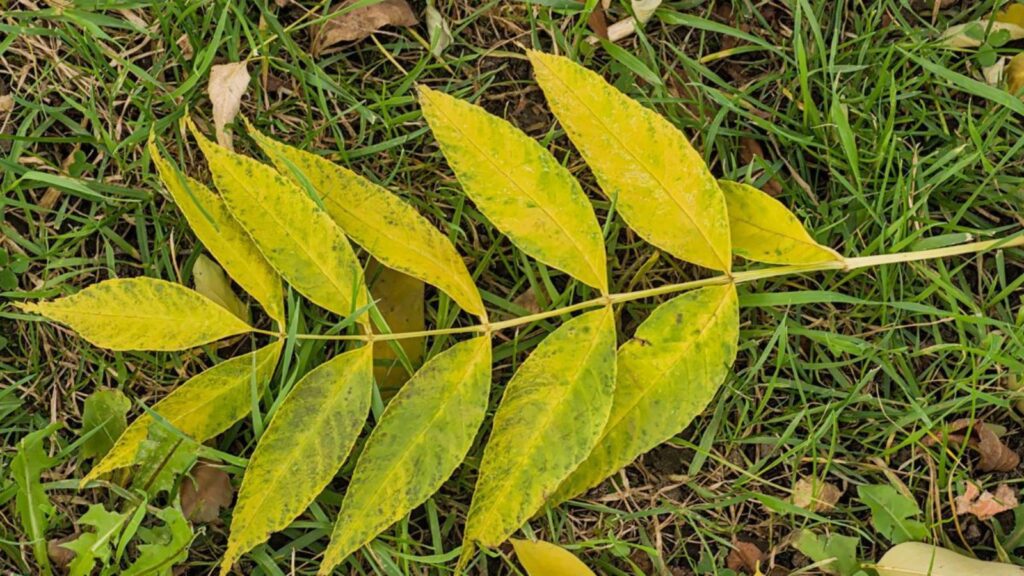
Every August, we receive calls from homeowners who notice one tree developing yellow leaves while neighboring trees still look like midsummer. It’s a comparison that naturally raises concerns, especially when the change seems to happen almost overnight.
In many cases, yellowing leaves in August are not the first signs of an early autumn. Arborists often refer to this as a “false fall” because trees can respond to heat, drought, root conditions, and other seasonal stress long before normal fall color develops.
Omaha’s hot summers, inconsistent rainfall, and varying soil conditions can all influence how individual trees respond to late-season stress. Understanding what to look for can help separate a normal seasonal response from signs that may require a professional evaluation.
Reading the Signs Behind Yellow Leaves
One pattern we frequently see is homeowners waiting until significant damage appears before scheduling an inspection. Early warning signs are often overlooked because yellow leaves are assumed to be part of the normal seasonal transition.
While yellowing leaves in August can simply reflect summer stress, an inspection is worth considering if you also notice:
- Yellowing throughout most of the canopy
- Large dead or dying branches
- Repeated canopy thinning from year to year
- Cracks or peeling bark on the trunk
- Mushrooms growing near the base of the tree
- A new lean or recent storm damage
Leaf color alone rarely tells the whole story. During an inspection, an arborist evaluates the canopy, trunk, root flare, and surrounding growing conditions together to determine whether the tree is responding to temporary environmental stress or experiencing a more significant health issue.
Early Yellowing Is Not Always Autumn
Many homeowners expect trees to begin changing color around the same time every year. In reality, leaves that turn yellow in August are usually responding to growing conditions rather than the calendar.
Healthy trees preparing for fall generally change color gradually as daylight hours become shorter. When yellowing begins weeks earlier than expected, arborists pay close attention to where the discoloration appears and how it progresses instead of assuming autumn has simply arrived early.
| What Homeowners Notice | What It May Suggest |
|---|---|
| Interior leaves yellowing first | Common late-summer response |
| Entire canopy changing color | Broader stress or health concern |
| Yellowing mostly on one side | Localized root or site conditions |
| Upper canopy changing first | Heat or moisture-related stress |
The timing alone rarely provides enough information. The location, extent, and progression of the discoloration often reveal much more than the date on the calendar.
The Pattern Matters More Than the Color
During a professional tree inspection, leaf color is only one piece of the overall evaluation.
For example, yellowing limited to older interior leaves is often part of a tree’s natural response to prolonged summer heat and dry conditions. Widespread discoloration across the canopy, however, or repeated thinning in the same areas year after year may indicate a problem affecting the tree’s long-term health.
We also commonly investigate situations where only one section of the canopy begins changing before the rest of the tree. Uneven discoloration frequently points toward differences in soil conditions, root health, or moisture availability rather than a disease affecting the entire tree.
Looking at the overall pattern helps arborists determine whether the tree is experiencing normal seasonal stress or something that deserves closer attention.
What the Ground Can Reveal First
Many homeowners are surprised to learn that a tree inspection often begins beneath the canopy instead of in the branches.
Late-summer discoloration frequently reflects conditions affecting the root system. Soil compaction, recent excavation, changes in drainage, construction activity, or years of repeated foot and vehicle traffic can all reduce a tree’s ability to absorb the water and oxygen it needs during Omaha’s hottest weeks.
| Site Condition | Possible Effect on Late-Summer Color |
|---|---|
| Driveway or sidewalk nearby | Increased reflected heat |
| Recent trenching or excavation | Root disturbance |
| Compacted soil | Reduced water and oxygen movement |
| Poor drainage | Added stress during changing weather |
Because root-related problems often develop gradually, visible changes in the canopy may not appear until weeks, or even months, after the original stress occurred.
Looking Beyond Yellowing Leaves in August
Seeing yellow leaves in August doesn’t automatically mean fall has arrived early or that your tree is dying. In Omaha, it’s common for neighboring trees to respond differently because no two growing environments are exactly alike.
Heat, rainfall, soil conditions, root health, and previous stress all influence how individual trees react during late summer.
If the yellowing spreads quickly, affects most of the canopy, or appears alongside dead branches, trunk damage, or other warning signs, a professional inspection can identify the underlying cause before the problem becomes more serious.
Frequently Asked Questions
Why are my tree’s leaves turning yellow in August?
Yellow leaves in August are commonly caused by heat, drought, root stress, or a tree’s natural response to late-summer conditions. The location and pattern of the discoloration usually provide more information than the timing alone.
Is August yellowing normal?
Yes, in many cases. Some trees naturally shed older interior leaves during periods of summer stress. However, widespread yellowing, heavy leaf loss, or declining branches may indicate a larger health concern.
Why is only one side of my tree turning yellow?
Uneven yellowing is often associated with localized growing conditions such as root damage, compacted soil, drainage issues, reflected heat, or previous construction activity.
Do nearby trees change color at different times?
Absolutely. Trees growing only a few yards apart may respond very differently because of differences in soil quality, sunlight exposure, available root space, irrigation, and overall health.
When should I have my tree inspected?
A professional inspection is recommended if yellowing spreads rapidly, affects most of the canopy, returns each year, or is accompanied by dead branches, trunk damage, mushrooms, or other signs of decline.
Tree Services of Omaha – Tree Removal Services
Tree Services of Omaha, Nebraska is a full-service tree care provider that offers a wide range of arborist services, including but not limited to: Tree Removal Services, Tree Trimming, Tree Pruning, Tree and shrubs Shaping, Stump Removal, Stump Grinding, Emerald Ash Borer Treatment, Mulch Delivery & Installation, Arborist Consultations, Systemic Tree Injection (Tree Healthcare).
Contact us today for a free estimate!