Trees can look healthy through much of summer and then show noticeable decline as the season ends. Leaves may brown early, branches may die back, or the canopy may become thinner than it was earlier in the year.
When that happens, homeowners often want to know whether tree decline after summer is caused by drought, disease, insects, or a combination of problems.
The visible symptoms do not always identify the cause. Heat and limited moisture can weaken a tree, while root problems, pests, or disease may contribute to decline at the same time.
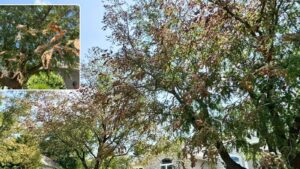
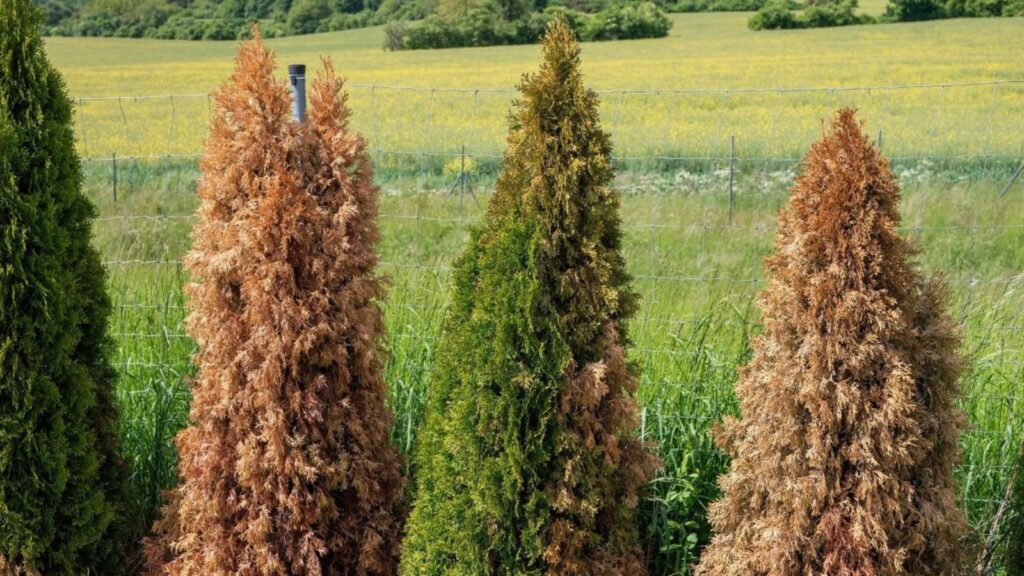
Signs of Summer Stress in Trees
A common misconception is that a tree that looks worse after summer must have been infected or attacked by insects.
Environmental stress can produce many of the same symptoms. Extended heat and dry soil can limit the water available to the canopy, especially when roots are already dealing with poor growing conditions.
Common signs include:
- Brown or scorched leaf edges
- Premature leaf drop
- Wilting or curling leaves
- Thinning foliage
- Smaller-than-usual leaves
- Dead twigs and branches
- Dieback in portions of the canopy
Timing provides useful context. If symptoms appeared during the hottest and driest part of summer, moisture stress may be involved. A tree can continue showing symptoms after conditions improve because damage does not disappear immediately.
These signs indicate stress, not necessarily its cause.
How Drought Stress Affects Tree Health
Drought may be only one factor contributing to a tree’s decline.
Prolonged moisture stress can reduce a tree’s ability to maintain normal growth and defenses. This may leave a stressed tree more vulnerable to certain insects or diseases.
Site conditions can increase that pressure, including:
- Compacted soil
- Restricted root growth
- Poor drainage
- Root damage
- Limited soil moisture
- Construction near the root zone
- Previous trunk or branch injuries
Simply watering a declining tree may not resolve the problem. If roots are damaged or soil drains poorly, additional water may do little to correct the underlying condition and can sometimes create other problems.
The goal is to identify what is limiting the tree rather than treating the most obvious symptom. Professional tree healthcare services can help evaluate growing conditions and other factors affecting tree health.
Could Pests or Disease Be Causing the Decline?
Pests and diseases can produce symptoms similar to drought stress, but physical evidence may provide additional clues.
Look for holes in leaves or bark, insects, sawdust-like material, fungal growth, unusual leaf spots, or progressive dieback.
Some insects are more likely to attack stressed trees, while others can directly damage healthy tissue. Wood-boring insects deserve particular attention because their activity can affect branches and portions of the trunk.
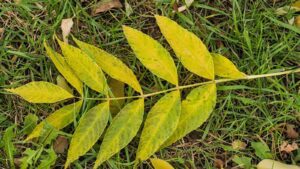
For example, emerald ash borer is a destructive insect that attacks ash trees and can cause canopy thinning, branch dieback, and eventually tree death. Homeowners with ash trees should be familiar with the warning signs and available emerald ash borer treatment options.
Disease symptoms vary by tree species and pathogen, so a single spot or discolored leaf is not enough to establish a cause.
| What You Notice | What It May Indicate | What to Investigate |
|---|---|---|
| Widespread browning or wilting | Drought or heat stress | Soil moisture and root conditions |
| Holes in leaves or bark | Possible insect activity | Location and type of damage |
| Sawdust-like material | Possible boring insects | Trunk and major branches |
| Leaf spots or discoloration | Possible disease or stress | Pattern and progression |
| Dead branches | Stress, disease, pests, or injury | Extent and location |
| Oozing or damaged bark | Injury, disease, or insects | Trunk and affected areas |
No single symptom provides a reliable diagnosis. For example, browning can result from drought, root problems, disease, or other forms of stress.
What to Check When Your Tree Looks Unhealthy
Before applying fertilizer, insect treatments, or other products, document the changes you can observe.
Consider:
- When symptoms first appeared
- Whether the entire canopy or one area is affected
- Whether nearby trees show similar symptoms
- Whether the tree received supplemental water
- Whether construction or landscaping occurred nearby
- Whether the trunk or branches show physical damage
Site history can also reveal problems that are not obvious from the canopy. Changes in grading, irrigation, soil depth, construction activity, or heavy equipment traffic may have affected roots.
Consider whether the problem affects one tree or several. Similar symptoms across multiple trees may point toward environmental conditions, while isolated decline may indicate a localized problem.
These observations do not replace a professional assessment, but they can provide useful background when investigating the cause.
When to Schedule a Professional Tree Assessment
Some seasonal stress can be monitored, but certain changes deserve closer evaluation.
An assessment is particularly important when:
- Large branches are dying
- The canopy is declining rapidly
- Pest activity is visible
- Significant bark damage is present
- Fungal growth or decay is suspected
- The tree has substantial deadwood
- The cause remains unclear
- The tree is near a home, driveway, street, or occupied area
Location also matters. A declining tree in an open part of a yard may have different safety concerns from one with dead or weakened branches extending over a home or frequently used area.
A professional assessment can help distinguish environmental stress from problems requiring treatment or structural attention. Depending on the findings, the response may involve improved growing conditions, tree trimming and pruning, pest or disease management, monitoring, or removal.
When a tree has extensive damage or poses a significant safety concern, professional tree removal may need to be considered if the tree cannot be safely preserved.
Identifying Why Your Tree Is Declining After Summer
Visible decline does not automatically mean a tree is dying or identify the cause of its condition. Brown leaves may reflect drought, but root problems, pests, or disease may also contribute.
Consider the timing, symptom pattern, and site conditions before treating the tree. If decline is extensive or accompanied by pest activity, decay, deadwood, or structural concerns, a professional assessment can help determine the appropriate next step.
At Tree Services of Omaha, tree health evaluations can help identify contributing factors and determine whether treatment, pruning, monitoring, or tree removal is appropriate.
Frequently Asked Questions
Can a tree recover after losing leaves during summer?
Sometimes. Recovery depends on the species, severity and duration of stress, root condition, and whether another problem is affecting the tree. New growth during the next growing season can provide useful evidence of recovery.
Does watering a stressed tree prevent pest problems?
Adequate moisture can reduce environmental stress, but it does not prevent every pest or disease issue. Watering is most useful when it addresses an actual moisture shortage without creating excessively wet soil.
Can only one side of a tree decline?
Yes. Uneven decline can occur when roots, branches, or portions of the trunk are affected by localized damage. The location of the affected growth can provide useful information during an assessment.
Should fertilizer be applied to a declining tree?
Not without first identifying the likely cause. Fertilizer may help when a genuine nutrient deficiency is involved, but it will not correct drought injury, root damage, poor drainage, insects, or disease.
Can a tree look healthy and still have a serious problem?
Yes. Some root, trunk, and structural problems may develop before major canopy changes become obvious. Recurring decline, bark damage, or unexplained branch loss can justify closer evaluation even when the tree still has substantial foliage.
Tree Services of Omaha – Professional Tree Care
Tree Services of Omaha is a full-service tree care provider that offers a wide range of arborist services, including but not limited to: Tree Removal Services, Tree Trimming, Tree Pruning, Tree and Shrub Shaping, Stump Removal, Stump Grinding, Emerald Ash Borer Treatment, Mulch Delivery & Installation, Arborist Consultations, Systemic Tree Injection (Tree Healthcare).
Contact us today for a free estimate!