Emerald ash borer infestations often begin long before major damage becomes visible. Because the insects attack beneath the bark, many homeowners do not notice a problem until the tree has already been severely affected. Identifying early warning signs can make a significant difference in protecting ash trees and preventing widespread damage.
Regularly inspecting ash trees during spring and summer can help reveal subtle indicators of infestation. Recognizing these early symptoms allows arborists to take action quickly, potentially saving trees through professional treatment.
Signs of Emerald Ash Borer on the Trunk and Bark
Some of the earliest evidence of emerald ash borer activity appears on the trunk or outer bark of the tree. Careful inspection can reveal damage caused by larvae feeding beneath the surface.
Common indicators include:
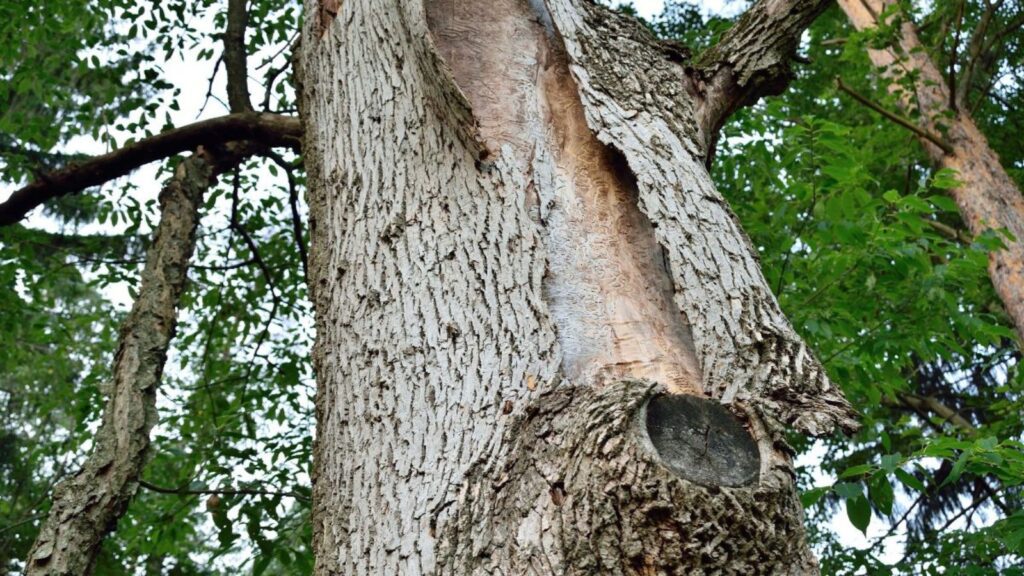
- Vertical bark cracks – Long cracks may appear along the trunk as internal damage develops beneath the bark.
- D-shaped exit holes – These small openings, typically about one-eighth of an inch wide, are created when adult beetles emerge from the tree.
- S-shaped larval galleries – When bark is removed or begins to peel, serpentine tunnels may be visible. These galleries are created by larvae feeding on the tree’s inner layers.
- Loose or peeling bark – Sections of bark may separate from the trunk as the internal structure weakens.
Detecting these signs early is important. If left untreated, emerald ash borers can continue feeding throughout the tree, significantly weakening its structure and health.
Canopy and Branch Decline
Changes in the tree’s canopy are often one of the first visible symptoms homeowners notice. As the infestation progresses, the upper branches may begin to lose leaves and decline.
Signs to watch for include:
- Thinning leaves in the upper canopy
- Dead branches appearing near the top of the tree
- Sparse or uneven foliage compared with nearby ash trees
- New shoots growing from the trunk or base of the tree
These new shoots, known as epicormic growth, often develop as the tree attempts to compensate for damage occurring higher in the canopy.
Tracking these changes over time can help identify potential emerald ash borer activity before the tree becomes severely compromised.
Why Early Detection Matters
Emerald ash borer infestations spread quickly once larvae establish themselves beneath the bark. As they feed, they disrupt the tree’s ability to move water and nutrients, eventually leading to significant decline or death.
Early detection allows arborists to evaluate whether the tree can still be treated. In many cases, professional treatments such as systemic injections can help protect ash trees when the infestation is identified early enough.
Ignoring early warning signs may result in the tree becoming too damaged to save, requiring removal for safety reasons.
Preventive Monitoring and Tree Care
Routine inspections and proper tree care can help reduce the risk of severe infestation. Maintaining healthy trees allows them to better withstand environmental stress and pest activity.
Helpful preventive practices include:
- Scheduling regular arborist inspections
- Proper mulching around the base of the tree
- Trimming damaged or dead branches
- Monitoring canopy health during the growing season
If you notice signs of emerald ash borer activity, a professional arborist can evaluate the tree and recommend treatment options to help protect it.
Frequently Asked Questions
What are the earliest emerald ash borer signs to watch for?
Early indicators include D-shaped exit holes, bark splitting, and a thinning canopy. These often appear before leaf damage becomes visible.
Can environmental stress mimic infestation signs?
Yes. Drought, disease, or soil compaction can cause similar symptoms. Observing multiple signs together helps confirm potential emerald ash borer activity in trees and shrubs.
How often should ash trees be inspected?
Monitoring during spring and summer at least twice a year is recommended. Regular inspections increase the chance of detecting early emerald ash borer signs.
Is a professional evaluation necessary?
Professional assessment is advised for confirmation and treatment planning. Experts can locate hidden infestations and provide health care guidance for trees and recommend preventive measures.
Tree Services of Omaha – Tree Removal Services
Tree Services of Omaha, Nebraska is a full-service tree care provider that offers a wide range of arborist services, including but not limited to: Tree Removal Services, Tree Trimming, Tree Pruning, Tree and shrubs Shaping, Stump Removal, Stump Grinding, Emerald Ash Borer Treatment, Arborist Consultations, Systemic Tree Injection (Tree Healthcare).
Contact us today for a free estimate!