
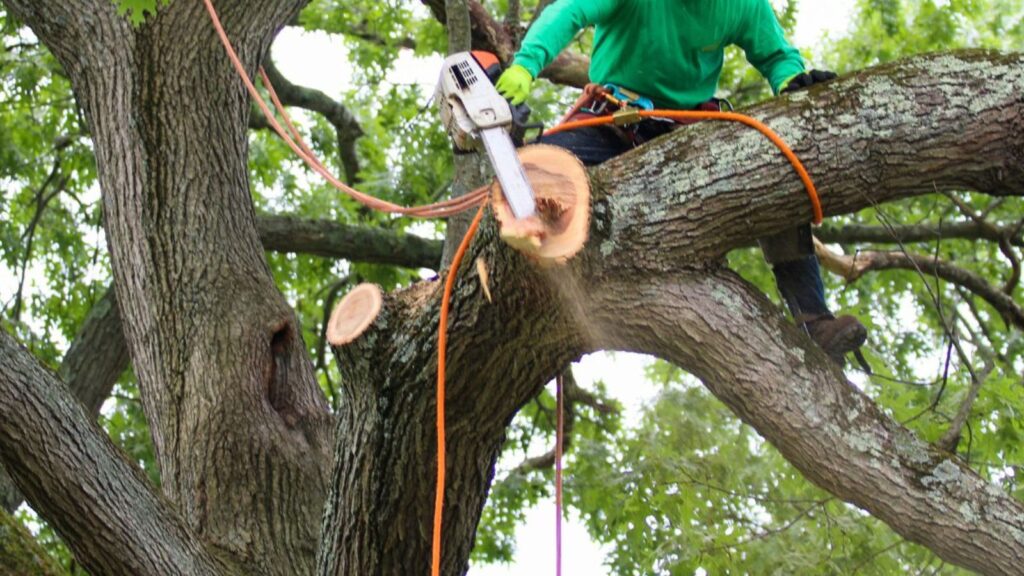
Professional tree trimming plays a crucial role in maintaining the health, stability, and longevity of trees. Routine trimming helps prevent structural weaknesses, reduces the risk of disease, and promotes balanced growth patterns. By addressing these issues early, professional trimming can often eliminate the need for complete tree removal while preserving the beauty and value of mature trees.
Scheduled trimming also supports overall tree vitality while minimizing potential hazards. Trees that receive regular professional care are less likely to develop large broken limbs, decay, or structural instability, which are common reasons trees must be removed. Proper trimming can help homeowners protect their landscape, reduce long term costs, and maintain a safe outdoor environment.
How Does Professional Trimming Save Tree Removals?
Reducing Structural Weaknesses
Structural weaknesses are one of the primary reasons trees eventually require removal. Overgrown branches, multiple leaders, and uneven weight distribution can create stress points that threaten a tree’s stability. Professional tree trimming addresses these concerns before they develop into major problems.
Key benefits include:
- Balanced canopy – Removing excessive or competing branches helps reduce the risk of split trunks or limb failure.
- Clearance and space management – Trimming prevents branches from interfering with homes, garages, power lines, or nearby trees.
- Stronger branch attachments – Proper pruning techniques improve the attachment strength of remaining limbs, reducing the likelihood of breakage.
Routine inspections during trimming also allow arborists to identify developing structural issues early. Trees with balanced growth and strong branch attachments are far less likely to reach a point where removal becomes necessary.
Disease and Pest Prevention
Tree trimming also helps limit the spread of disease and pest infestations. Dead or decaying branches, along with dense foliage, can create conditions where insects and pathogens thrive. Removing these problem areas allows trees to remain healthier and better protected.
Signs that trimming may help address include:
- Branch dieback or discoloration
- Fungal growth or rot near branch junctions
- Evidence of insect activity such as bore holes or sap leakage
By removing damaged or infected limbs, professional trimming can improve overall tree health. Healthy trees are better able to withstand environmental stress and defend themselves against pests and disease, reducing the likelihood that removal will eventually be necessary.
Managing Growth and Appearance
Trees that grow without maintenance can begin interfering with structures, landscaping features, and utility lines. Strategic trimming guides growth while maintaining both the beauty and safety of the landscape.
Common trimming techniques include:
- Selective thinning – Removes crowded branches to improve air circulation and allow sunlight to reach inner limbs.
- Crown reduction – Reduces the size of a tree’s canopy while preserving its natural shape.
- Formative pruning – Helps young trees develop strong structure and prevents future growth problems.
Professional trimming helps trees remain healthy, visually appealing, and structurally sound. Managing growth early often prevents the need for removal caused by overcrowding or structural damage.
Safety and Risk Reduction
Trees with large damaged limbs can pose serious risks to homes, vehicles, and pedestrians. Professional trimming removes these hazards while preserving the health of the tree.
Benefits include:
- Reducing storm damage risk
- Preventing falling branches
- Improving access for tree inspections and maintenance
Regular trimming also allows arborists to identify hidden problems such as internal decay, cracks, or structural weaknesses. Addressing these issues early can prevent emergency situations that may otherwise require full tree removal.
Frequently Asked Questions
How does trimming reduce the need for tree removal?
Trimming addresses structural weaknesses, disease, and excessive growth before they reach critical levels. Removing only selected branches preserves tree health while preventing hazards that could require removal.
How often should trees be trimmed to avoid removal?
Regular inspections and trimming, usually every 2–3 years for mature trees, support structural integrity and prevent disease. Some species may benefit from more frequent maintenance depending on growth rate and environmental conditions.
Can trimming prevent pest infestations from requiring tree removal?
Yes. Removing dead or decaying branches and improving air circulation reduces environments favorable to pests and disease, lowering the risk of conditions that could lead to removal.
Is professional expertise necessary for effective trimming?
Professional trimming for tree removals ensures proper techniques, equipment, and timing. Experts can evaluate tree health, recommend pruning strategies, and address structural issues safely.
What are the long-term benefits of professional trimming?
Long-term benefits include stronger trees, reduced emergency removals, improved aesthetics, and safer landscapes. Consistent trimming supports both the health and the lifespan of trees.
Tree Services of Omaha – Tree Removal Services
Tree Services of Omaha, Nebraska is a full-service tree care provider that offers a wide range of arborist services, including but not limited to: Tree Removal Services, Tree Trimming, Tree Pruning, Tree and shrubs Shaping, Stump Removal, Stump Grinding, Emerald Ash Borer Treatment, Arborist Consultations, Systemic Tree Injection (Tree Healthcare).
Contact us today for a free estimate!


