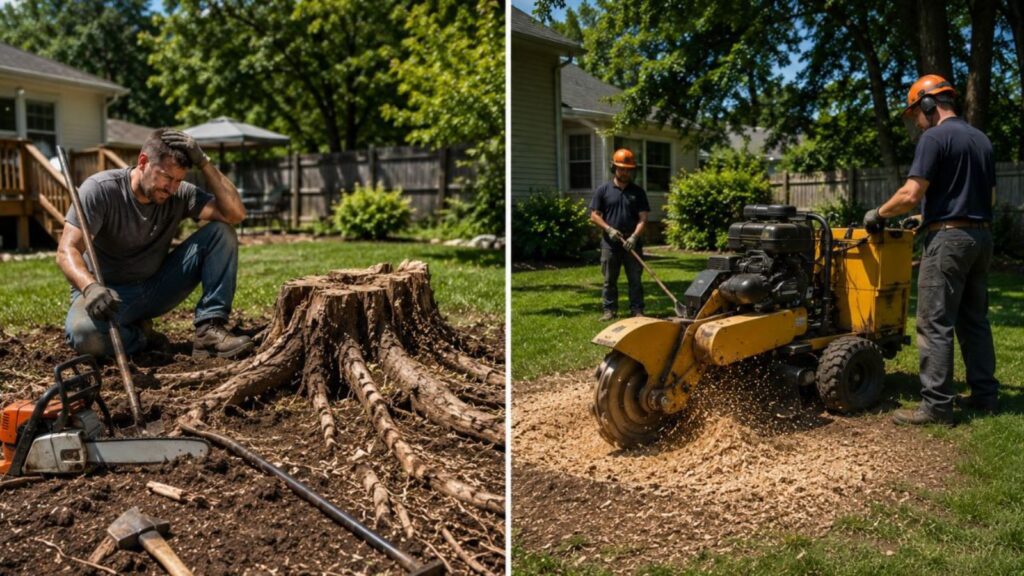
Summer is one of the busiest seasons for outdoor projects, making it a popular time for homeowners to tackle old tree stumps that have been sitting in the yard for years. Before renting equipment, many people compare DIY stump removal vs. professional stump grinding to determine which option makes the most sense.
What often catches homeowners off guard is how much summer weather can affect the job. A stump that appears loose above ground may still be firmly anchored by an extensive root system hidden beneath dry, compacted soil.
Understanding how summer conditions impact stump removal can help you determine whether the project is realistic or whether professional stump grinding is the safer and more efficient solution.
Why Dry Summer Soil Makes Stump Removal Harder
One question that comes up frequently is why a stump that looks manageable can turn into a much larger project during the summer.
Several conditions commonly make stump removal more challenging:
- Compacted soil slows digging. After weeks of dry weather, the ground becomes denser, making it harder to expose and cut through major roots.
- Summer rain doesn’t always loosen the stump. A summer storm may soften the surface, but deeper soil often remains firm, leaving the root system tightly anchored.
- Large roots stay hidden. Mature trees usually have structural roots extending well beyond the visible stump, and hard soil makes them more difficult to locate.
- Progress is often much slower than homeowners anticipate. Much of the work involves exposing roots before the stump shows any noticeable movement.
At Tree Services of Omaha, we frequently see homeowners underestimate how difficult stump removal becomes during Nebraska’s hot, dry summers. What appears to be a simple weekend project often turns into hours of digging before the stump shows any noticeable movement.
DIY Stump Removal vs. Professional Stump Grinding
A common assumption is that stump removal and stump grinding accomplish the same thing. They actually produce different results and involve different levels of work.
| Many People Expect | What Usually Happens |
|---|---|
| Pulling the stump only requires removing a few large roots. | Mature trees often have structural roots extending several feet beyond the visible stump. |
| A summer rainstorm makes digging much easier. | Surface soil softens first, while deeper roots remain tightly anchored. |
| Renting a stump grinder means the project will move quickly. | Site preparation and careful machine positioning often take longer than expected. |
| Once the stump is gone, the area is immediately ready for new landscaping. | Some projects still require grading, soil replacement, or planning around remaining roots. |
Knowing the differences between DIY stump removal and professional stump grinding makes it easier to choose the most suitable approach for your property.
What Homeowners Usually Discover Underground
The biggest surprises are often below the surface rather than above it.
Common discoveries include:
- Large structural roots extending well beyond the stump
- Buried rocks that interfere with digging or grinding
- Irrigation lines or landscape lighting installed years after the tree was planted
- Old fence posts or construction debris
- Root systems from nearby mature trees growing into the same area
A common pattern is that reaching the first large root does not mean the hardest part is over. The stump is often connected to several additional structural roots that require much more work than expected.
Safe Stump Grinding Requires More Than the Right Equipment
A common misconception is that renting a stump grinder automatically makes the project straightforward.
Before the machine is started, the site should be evaluated carefully. That preparation often includes:
- Checking for nearby patios, sidewalks, or foundations
- Looking for rocks around the stump
- Identifying uneven ground or slopes
- Confirming there is enough room to maneuver equipment safely
- Planning where wood chips will be directed
Professional stump grinding also involves understanding how underground conditions, nearby structures, and the size of the root system affect the grinding process. Experience often makes the difference between completing the project efficiently and creating unnecessary damage to the surrounding landscape.
First-time operators often spend too much time grinding one section of the stump. Instead of removing the stump evenly, they may create a deep pocket that makes the remaining work slower and less efficient.
Planning After Stump Removal
It’s easy to focus on removing the stump without deciding how the space will be used afterward.
That future purpose often determines which removal method makes the most sense.
| Future Project | What to Consider |
|---|---|
| New lawn | Grinding below the surface is often enough before adding topsoil and seed. |
| Garden bed | Limiting unnecessary excavation helps preserve surrounding soil. |
| Replacement tree | Remaining roots may influence where the new tree can be planted. |
| Patio or walkway | Additional grading or root removal may be needed for a stable foundation. |
A common situation occurs months after a stump has been removed, when a homeowner decides to plant another tree in the same location. Remaining roots may limit the available planting space, making it worthwhile to consider future landscaping plans before removal begins.
Planning ahead also helps determine whether stump grinding alone will accomplish your goals or whether complete stump and root removal is the better long-term solution.
Frequently Asked Questions
Is summer a good time for DIY stump removal?
Summer provides reliable weather for outdoor work, but dry, compacted soil can make stump removal much more difficult. Digging often requires significantly more effort because the roots remain firmly anchored beneath the surface.
What is the difference between stump removal and stump grinding?
Stump removal extracts the entire stump and root ball from the ground. Stump grinding removes the visible stump below ground level while allowing most of the larger roots to naturally decompose over time.
Why does summer soil make stump removal more challenging?
Extended heat causes soil to become compacted, making it harder to expose and cut through major roots. Even after rainfall, deeper soil often remains firm while only the surface softens.
Can I rent a stump grinder and do the job myself?
Rental stump grinders are available, but operating them safely requires careful planning and experience. Uneven terrain, hidden obstacles, underground utilities, and nearby structures can quickly make the project more complicated than homeowners expect.
When should a professional handle stump grinding?
Professional stump grinding is often the better choice when the stump is large or located near buildings, utilities, sidewalks, driveways, mature trees, or other landscape features. An experienced tree care company can evaluate the site, identify potential challenges, and recommend the safest and most effective approach.
DIY Stump Removal vs. Professional Stump Grinding: Choosing the Right Approach
Every property is different, and the best solution depends on the size of the stump, the surrounding landscape, and your plans for the area after removal.
While smaller stumps in open areas may be manageable for some homeowners, larger stumps, extensive root systems, dry summer soil, and nearby structures often make professional stump grinding the safer and more practical choice.
At Tree Services of Omaha, we’ve helped homeowners throughout the Omaha area safely remove stumps of every size. Our experienced team understands the challenges Nebraska soil conditions can create and has the equipment to complete the job efficiently while minimizing disruption to your property.
Tree Services of Omaha – Tree Removal Services
Tree Services of Omaha, Nebraska is a full-service tree care provider that offers a wide range of arborist services, including but not limited to: Tree Removal Services, Tree Trimming, Tree Pruning, Tree and shrubs Shaping, Stump Removal, Stump Grinding, Emerald Ash Borer Treatment, Mulch Delivery & Installation, Arborist Consultations, Systemic Tree Injection (Tree Healthcare).
Contact us today for a free estimate!